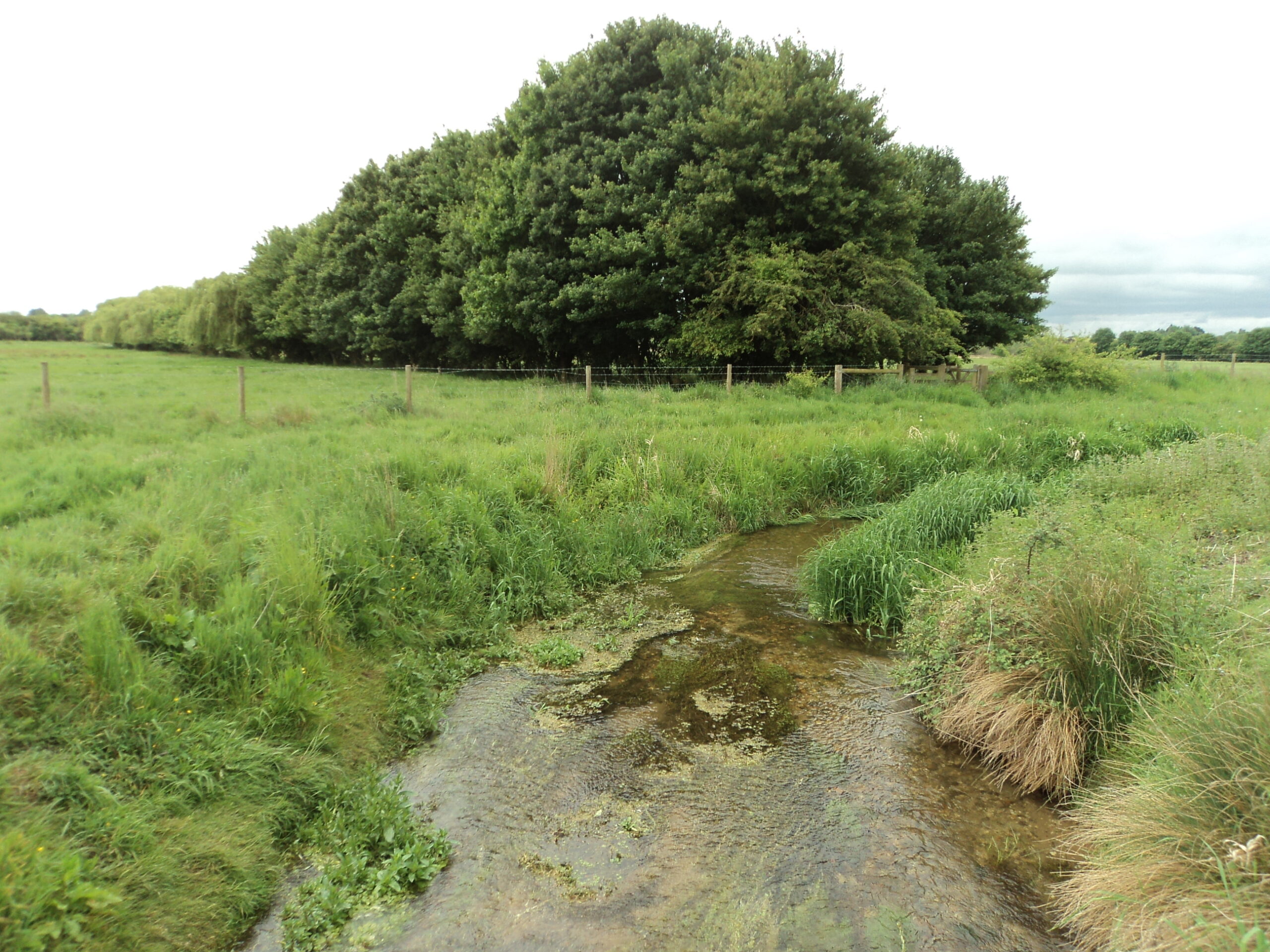
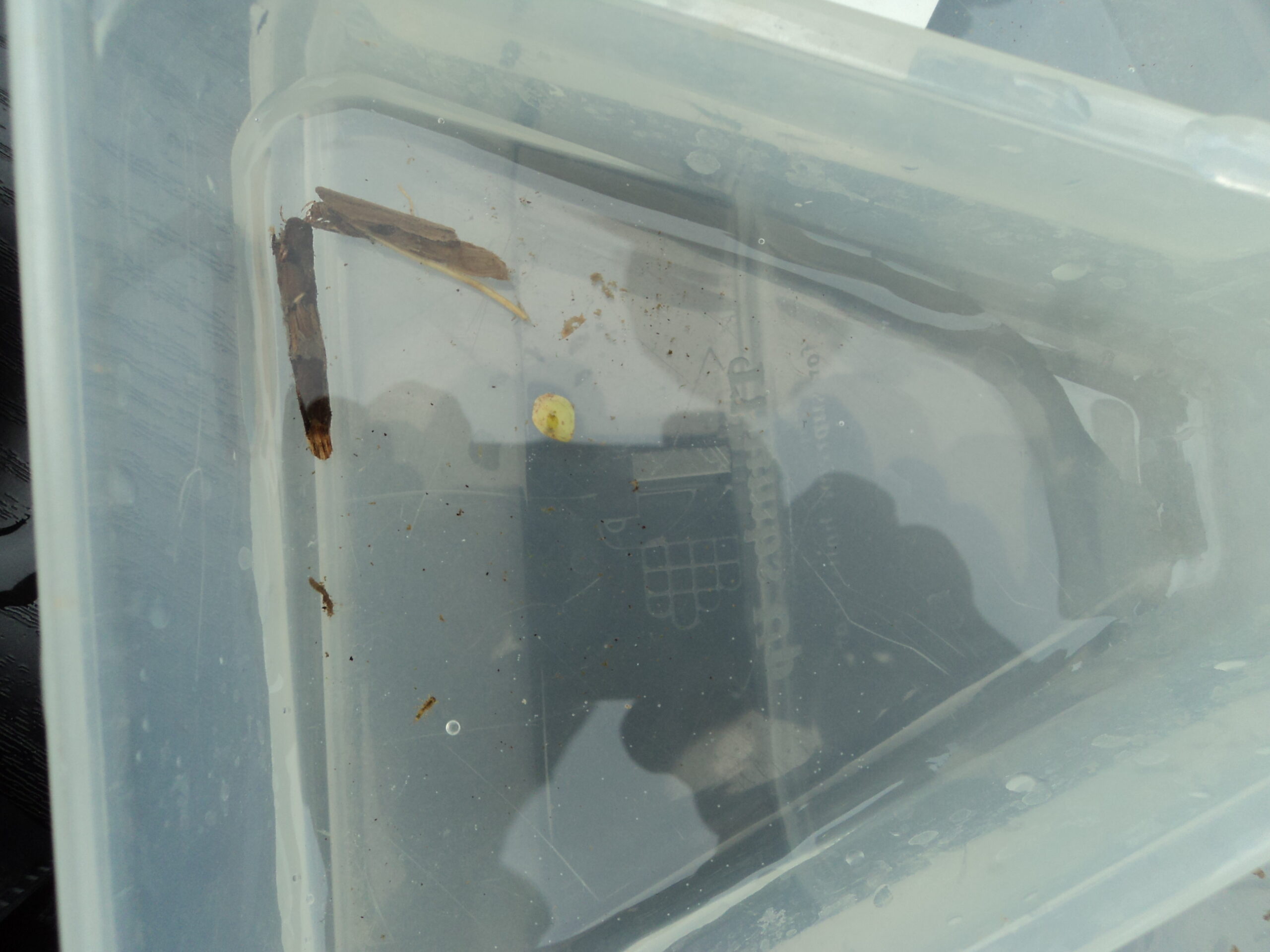
Volunteers met in an area of grassland by the Gaywood River. Alistair said the morning’s activity was to identify and count the small invertebrates found in the river by the foot bridge. These were collected by net from the stream floor then transferred to a dish where the larger individuals were picked up either by a tea spoon or the smaller ones by a pipette, counted and deposited into separate compartments in another dish. Then with the help of Alistair and his Identification guides he provided, these were identified. The most numerous species were four stickleback fish, fresh water shrimps, Black Fly larva standing vertical with their anus stuck to the base of the dish, Olive Baetidae, Blue winged Olives , a small Snail and two Caddis Fly larvae, encased in a tube of sand. Another group surveyed the grassland by the River to identify the flowering species there, which would be selectively cropped by the high rabbit numbers. Typical heath populations were Heath Bedstraw, Dog Violet and Speedwell. A total of fourteen different flowering species were found. Both groups were surprised and pleased by the biological diversity in the Gaywood River and on the surrounding heathland.
Additional photographs can be viewed by clicking on the link below